
You look at your bookshelf and immediately feel that familiar moving-day dread. It’s tall, it’s heavy, and it’s absolutely packed with books you forgot you owned. Whether it’s a solid wood unit that weighs a tonne or a flat-pack variety held together by optimism and a handful of cam locks, bookshelves have a reputation for being awkward to move. They tip, they scratch, they collapse at the worst possible moment.
But it doesn’t have to be that bad. Knowing how to pack and move a bookshelf properly makes the whole thing far more manageable. The right approach protects both the furniture and the people carrying it. This guide walks you through every stage, from clearing the shelves to getting it back together in your new place.
TL;DR
- Always remove all books and items from the bookshelf before attempting to move it.
- Disassemble the bookshelf if it allows, as this dramatically reduces the risk of damage and injury.
- Label every component as you take it apart so reassembly doesn’t become a guessing game.
- Wrap all parts in moving blankets or bubble wrap and secure them before loading.
- Load the bookshelf flat or upright against the vehicle wall with heavier items at the base.
- Never leave books on the shelves during transit, even one shelf of books adds serious weight.
- Use a sack truck for heavy units and always get a second person for anything tall or oversized.
Table of Contents
Why Does Proper Preparation Make Such a Difference?
Skipping the preparation when you move a bookshelf is one of those decisions that feels fine right up until it isn’t.
Bookshelves are deceptively risky pieces of furniture. They’re tall and top-heavy, which means they can tip suddenly when being carried. Flat-pack units aren’t built to be lifted from odd angles. Stress the joints wrong and you’ll hear a crack that tells you the bookshelf isn’t going to survive the move in one piece.
There’s also the physical side. A large bookshelf, even when empty, can be genuinely heavy. HSE manual handling guidance recommends lifting with a straight back and bent knees, and states that loads which feel unmanageable should not be moved alone. Two people, or the right equipment, make an enormous difference. Men should generally avoid lifting more than 25kg close to the body at waist height; for women the recommended limit is 16kg. These figures apply to people in good health. Anything that feels beyond those limits needs extra help.
Then there’s the question of what happens to walls, door frames, and floors when something goes wrong. Scratches, dents, scuffs on freshly painted walls, these things happen when furniture is rushed out of a property without care. In a rented home, that can mean losing part of your deposit. Taking an extra hour to do this properly is almost always worth it.
Check also:
How to Pack and Move a Bookshelf: Step by Step
Moving a bookshelf safely comes down to a clear, ordered process. Rush any stage and you create problems for every stage that follows. Here’s the full process, from start to finish.
Follow these steps in order to safely pack and move a bookshelf without damage to the furniture or injury to yourself.
Clear and Clean the Bookshelf
Remove every book, ornament, and item from the shelves before you do anything else. Even a single shelf left loaded adds surprising weight and shifts the balance dangerously when the unit is being carried. Once it’s empty, wipe down the surfaces with a dry cloth. Dust and grime trapped under wrapping can scratch the finish during transit.
Disassemble Where Possible
If the bookshelf can be taken apart, do it. Most flat-pack units come apart with a screwdriver or Allen key. Remove shelves first, then work on the main frame. Keep all fixings (screws, cam locks, dowels) together in a small zip-lock bag so nothing gets lost. Solid wood bookshelves with fixed shelves may not disassemble, in which case skip this step and move on.
Label Every Component
As you take pieces off, label them immediately. A simple numbering system works well: write on a small piece of masking tape and stick it somewhere discreet on the piece. You don’t need to be elaborate about it, just clear enough that when you’re standing in a new room three weeks later, you know which shelf goes where. Label the bag of fixings too.
Wrap and Protect All Parts
Cover every component with moving blankets or bubble wrap, paying particular attention to corners and edges where damage is most likely. Secure the wrapping with packing tape, but don’t let the tape touch the furniture surface directly or it may pull off the finish when removed. For glass shelves specifically, wrap each one individually and mark them clearly as fragile.
Prepare for Transport
When loading the vehicle, place wrapped bookshelf panels flat or stand the main unit upright against the vehicle wall. Never leave it free-standing without support. Secure it with straps or rope to prevent movement in transit. Position heavier, more stable items alongside it to stop it shifting on corners. If carrying it as one assembled unit, ensure it fits through doorways before you commit to that route.
Reassemble at the Destination
Once you arrive, reverse the process. Find a clear space, lay out the components, and work from your labels. Reattach shelves in the order they came off. Check that all fixings are fully tightened before loading the bookshelf with books again. Give it a gentle wobble to make sure it’s stable before you walk away.
Check also:
What Packing Materials and Tools Do You Actually Need?
Having the right supplies before you start saves a lot of last-minute scrambling. You don’t need a van full of specialist gear, but cutting corners here tends to show up as scratched furniture or damaged shelves at the other end. Here’s what to have ready before you begin.
- Moving blankets: thick, padded blankets designed to wrap large furniture without trapping abrasive particles against the surface. Ideal for covering the main bookshelf body and keeping it protected in transit. Hire or buy these. They’re worth every penny.
- Bubble wrap: especially important for glass shelves and any decorative or finished surfaces that are prone to scratching. Wrap corners and edges generously.
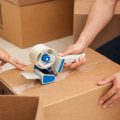
- Packing tape: to secure wrapping in place. Use it on the blanket or wrap only, not directly on the furniture. Once tape adhesive touches a painted or varnished surface, removing it cleanly becomes a whole separate problem.
- Masking tape and a marker: for labelling components as you disassemble. Masking tape is safe to write on, easy to remove, and leaves no residue on wood or composite surfaces.
- Small zip-lock bags: for screws, cam locks, dowels, and any other fixings. Tape the bag to a labelled panel so it travels with the right piece.
- Screwdriver and Allen key set: for flat-pack disassembly. Most flat-pack bookshelves use a combination of Phillips screws and hex bolts. Check which sizes you need before you start.
- Rubber mallet: useful for gently knocking apart joints that have become stiff over time. Never use a metal hammer directly on a bookshelf panel.
- Furniture dolly or sack truck: an absolute necessity if the bookshelf is heavy or if you need to move it any significant distance before loading it. Trying to carry a large bookshelf without one across a hallway or down stairs is how backs get hurt.
- Furniture sliders: small pads that fit under the feet of the bookshelf and let you glide it across hard floors without lifting. Brilliant for repositioning it at the new property without needing a second person.
- Straps or rope: to secure the bookshelf inside the vehicle. It should not be able to move in transit. One sharp corner taken too fast and an unsecured bookshelf becomes a hazard for everything around it.
A note on materials: if you’re trying to reduce waste during your move, moving blankets are a solid choice because they’re reusable across multiple moves. Old bed sheets, towels, and clothing can also serve as padding for lighter or less fragile components, saving you from buying single-use bubble wrap. For fixings, paper bags or small cotton pouches work just as well as plastic zip-lock bags if you’d prefer to avoid the plastic. None of this requires spending more. It just requires thinking slightly differently about what you already have.
If you’d rather not source all of this yourself, a professional removals and packing service handles the wrapping, padding, and protection of your furniture from start to finish, with all materials included.
Need help moving your furniture safely?
Let's Get in TouchFor questions about the services we offer visit our main site or you can always call us at 020 3746 0584
How Do You Move a Heavy or Oversized Bookshelf Safely?
Some bookshelves aren’t just awkward. They’re genuinely heavy. Solid hardwood units, large display shelving, or old-fashioned bookcases built before flat-pack became the norm can weigh considerably more than a single person should attempt to lift. Here’s how to handle the bigger ones safely.
Use a sack truck whenever you can
A sack truck takes the weight off your back and keeps the bookshelf stable as it moves. Tilt the unit slightly, slide the base of the sack truck underneath, then keep the unit close to vertical as you roll it. Don’t lean it back at a steep angle. That puts the weight through a very small contact point and increases the chance of it tipping.
Measure doorways before you start
This sounds obvious, but it’s one of the most common causes of genuine mid-move panic. Measure the widest point of the bookshelf and compare it to the narrowest point of the doorway, including any architrave or skirting. If it doesn’t fit upright, plan to either tilt it, disassemble it, or remove the door from its hinges if necessary. Removing hinges takes about five minutes and saves a lot of swearing.
Two people for anything above waist height
A bookshelf taller than you are has a high centre of gravity and can tip unexpectedly. Two people, positioned at either end, gives you far more control over where it goes. When navigating stairs, always have the stronger person at the lower end taking more of the load. That way, if the unit shifts, the person at the top has more control and the person at the bottom isn’t fighting the full weight alone.
Clear the route first
Before you lift anything, walk the full route from where the bookshelf is to where the van is parked. Move rugs, close doors that open into the path, shift other boxes out of the way. A clear route means you’re not stopping mid-carry to kick something aside, which is exactly when accidents happen. This takes two minutes and genuinely reduces the risk of damage and injury.
Check also:
Frequently Asked Questions
How do you move a bookshelf without taking it apart?
If the bookshelf can’t be disassembled, wrap it fully in moving blankets and secure the wrapping with tape. Use furniture sliders to glide it across floors without lifting, and a sack truck or furniture dolly for transporting it over longer distances. In the vehicle, stand it upright against the wall and strap it securely in place. Get a second person to help with carrying. Tall assembled bookshelves should never be moved solo.
Is it better to transport a bookshelf upright or on its side?
Upright is generally better for structural integrity, as most bookshelves are designed to bear load vertically. If the unit is too tall to transport standing, lay it flat with the back panel face down. Avoid resting it on an edge or at an angle, as this stresses the joints. Pad it well regardless of orientation and secure it so it can’t shift during the journey.
How do you protect a bookshelf’s finish during a move?
The most common causes of finish damage are bare tape applied directly to the surface, abrasive material rubbing against it in transit, and impact from other items in the vehicle. Wrap the bookshelf first in a soft layer, a moving blanket or a clean bed sheet works well, before adding any packing tape or tighter wrapping on top. Keep painted, varnished, or lacquered surfaces away from anything rough or heavy in the vehicle.
Get your furniture packed and protected for moving day.
Enter your postcode to view our rates and availability in your area.
For questions about the services we offer visit our main site or you can always call us at 020 3746 0584
Conclusion
Moving a bookshelf properly isn’t complicated, but it does require a bit of patience and the right preparation. Clear it, disassemble it where you can, label everything, wrap it well, and secure it in the vehicle. Follow those steps and you’ll arrive at the other end with a bookshelf that looks exactly the same as when you left.
The mistakes that cause damage or injury are almost always the result of rushing. Give yourself enough time, get a second pair of hands for anything tall or heavy, and don’t skip the wrapping. It really is that straightforward.