Moving house is stressful enough without having to puzzle out how to pack a lampshade for moving. They’re awkward, they’re delicate, and most people just wing it — stuffing them into whatever box is nearby and hoping for the best. That rarely ends well. Lampshades might not seem like priority packing items, but they scratch, dent, and warp far more easily than you’d expect.
The good news is that packing them properly doesn’t take long, and it doesn’t require anything fancy. A bit of the right material, the right size box, and a clear method make all the difference. This guide walks you through exactly what to do, including some tips that are easy to miss.
TL;DR
- Always remove lampshades from the lamp base before packing.
- Wrap each shade in bubble wrap or packing paper to protect the surface.
- Use a box slightly larger than the shade for a snug, secure fit.
- Fill empty space inside the box with packing peanuts or crumpled paper.
- Different lampshade materials — fabric, glass, paper — need different wrapping approaches.
- Always label lampshade boxes as fragile and load them last in the moving vehicle.
Table of Contents
How Do You Pack a Lampshade for Moving Without Damaging It?
To pack a lampshade safely for moving, remove it from the base, wrap it in bubble wrap or packing paper, place it in a snug-fitting box, and fill any gaps with crumpled paper or packing peanuts. Seal the box firmly and label it fragile. This keeps the shade protected from pressure, friction, and impact during transit.
Here’s the full step-by-step:
- Remove the lampshade from the base. Don’t try to pack the whole lamp as one unit. The shade and the base have completely different packing needs. Unscrew or unclip the shade and set it aside. Remove the bulb too before you do anything else.
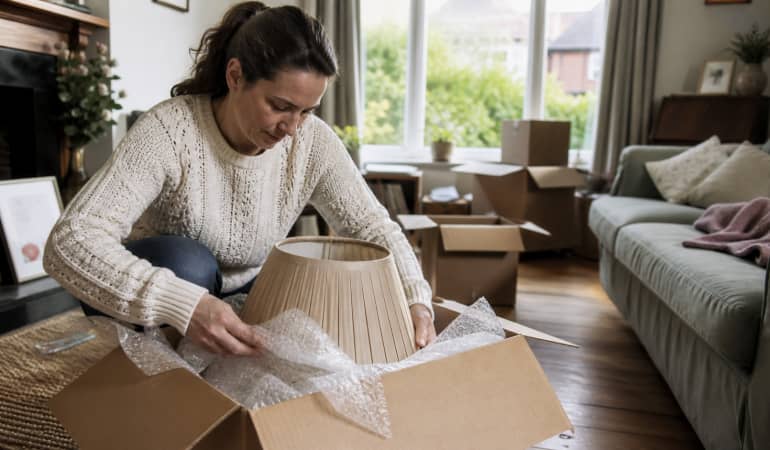
- Wrap the shade in bubble wrap or packing paper. Start from the inside out. Lay a sheet of packing paper flat and set the shade on top, then fold the paper up and over the frame. Follow with a layer of bubble wrap around the outside. Secure it with tape, but don’t press the tape directly onto the shade itself — stick it to the wrapping material only.
- Pick the right box. You want a box that’s slightly larger than the shade, not twice the size. Too small and you risk compressing it. Too large and it rattles around and gets damaged anyway. A snug fit with a little room for cushioning is ideal.
- Place the shade inside the box. Set it in gently. If the shade is conical or has a wide base, place it upright in the position it naturally sits. Don’t force it in at an angle.
- Fill the gaps. Any empty space is an opportunity for the shade to shift and knock against the sides. Pack crumpled paper, packing peanuts, or soft material like tea towels around it until it’s held firmly in place.
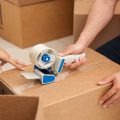
- Seal the box. Run tape along the top seam and reinforce the bottom too. A single strip isn’t enough for a box carrying fragile items.
- Label it clearly. Write “fragile” on the top and at least two sides. This tells everyone handling the box to treat it with care and not to stack it under heavy items.
That’s really all there is to it. The method isn’t complicated, but skipping any of those steps is where people run into problems.
Check also:
Why the Right Packing Materials Actually Matter
It’s tempting to grab whatever’s lying around — old newspapers, carrier bags, that spare duvet you’re not sure fits anywhere. For lampshades, though, the material you choose genuinely affects whether the shade arrives intact.
Here’s what works and why:
Bubble wrap
This is your best all-rounder for lampshades. The air pockets absorb impact and keep the shade from making direct contact with the box walls. Wrap it generously, especially around the rim and any protruding parts of the frame.
Packing paper
Plain packing paper is ideal for the first layer directly against the shade. It’s smooth, it won’t snag on fabric, and it creates a clean barrier before you add bubble wrap over the top. Avoid newspaper for the inner layer — the ink transfers and stains fabric shades. It’s an easy mistake to make and an annoying one to deal with at the other end.
Packing peanuts or crumpled paper
These are gap-fillers. Once the shade is in the box, you need something to hold it still. Packing peanuts are lightweight and fill awkward spaces well. Crumpled paper works too, though you’ll need more of it to get the same effect. Either one stops the shade from shifting during transit.
The box itself
A flimsy or damaged box is a liability. Use double-walled boxes for lampshades where you can, particularly for larger or heavier ones. The extra rigidity prevents the sides from bowing inward under pressure. If you’re reusing old boxes, check for weak spots or moisture damage before you trust them with something fragile.
Need help packing fragile items for your move?
Let's Get in TouchFor questions about the services we offer visit our main site or you can always call us at 020 3746 0584
Packing Different Types of Lampshades
Not all lampshades are built the same, and that means the packing approach needs to shift depending on what you’re working with. The core method stays consistent, but there are important adjustments for different materials and shapes.
Fabric lampshades
These are the most common and also the most vulnerable to staining. Newsprint is an obvious culprit, but even some packing papers can transfer colour under pressure. Always use acid-free tissue paper or plain white packing paper as the first layer. If the fabric is light-coloured or delicate, wrap the shade without pulling the paper tight — you want protection, not compression.
Glass lampshades
Glass shades need more cushioning than almost anything else you’ll pack. Wrap the outside thoroughly in bubble wrap, but also tuck some crumpled tissue or packing paper inside the shade itself. This interior cushioning prevents the walls from flexing inward on impact. Pack glass shades in their own individual boxes and don’t share the space with other items.
Paper lampshades
Paper shades dent and tear surprisingly easily. Even moderate pressure during transit can leave permanent creases. Wrap them in a first layer of tissue paper to cushion the surface, then add bubble wrap around the outside. Handle these ones with particular care when placing them in the box — no squeezing them in.
Unusual shapes
Bell-shaped, empire, or drum shades each have different contact points and stress zones. A bell shade has a wider base that’s more exposed. An empire shade has a slanted profile that can make it want to roll. Consider how the shade will sit in the box and make sure it’s held in a stable position, not just loosely surrounded by packing material.
Check also:
What Are the Most Common Mistakes When Packing Lampshades?
Most lampshade damage during a move comes down to a handful of avoidable mistakes. Know what they are, and you can sidestep them completely.
- Using a box that’s too large, causing the shade to move around during transit
- Skipping the fragile label, so the box gets stacked under heavy items
- Over-packing the box, which compresses the shade and warps its shape
- Wrapping with newspaper, which stains fabric and paper shades
- Packing without filling the internal gaps, leaving the shade unsupported
- Forgetting to remove the shade from the base, which puts stress on both during the move
The wrong box size is probably the most common issue. People grab whatever’s available, and if the box is too big, the shade migrates to one side in transit and gets damaged. If it’s too small, they force the shade in and the frame bends. Either way, the fix is simple: measure the shade before you grab a box.
Not labelling boxes as fragile causes unnecessary damage too. Removal crews handle dozens of boxes in a single move. Without a clear label, your lampshade box could end up at the bottom of a stack with several heavy items pressing down on it. A simple “fragile” label on multiple sides changes how it gets handled.
Over-packing is less obvious but just as damaging. If you stuff too much filler around the shade and then try to close the box, you’re applying direct pressure from the lid downward. The shade compresses, the frame bends, and the fabric or paper surface creases. Fill to support, not to compress.
Check also:
Getting Lampshade Boxes Right on Moving Day
Lampshades need a bit of strategic thinking when it comes to how they’re handled on the day itself. They can’t be an afterthought you deal with at the last minute.
Pack fragile items on their own timeline
Don’t leave lampshades until moving day. Pack them a day or two in advance when you have the time and headspace to do it properly. Rushed packing at the end of a long day is how corners get cut, and things get broken.
One shade per box where possible
It might feel wasteful to use a whole box for a single lampshade, but sharing the space with other items increases the risk significantly. Even items that seem harmless can shift in transit and press against the shade. Keep each one in its own box.
Load fragile boxes last
Whatever goes into the moving vehicle last gets unloaded first and sits at the back, away from heavier items. Load your lampshade boxes after the furniture and heavy boxes are already in. They’ll travel with less weight pressing around them, and they’ll be easier to access when you arrive.
If you have a large number of delicate items to deal with, a professional packing service handles the wrapping, boxing, and labelling of fragile pieces as part of the overall job, which takes the pressure off entirely on a busy moving day.
Get your fragile items packed safely for moving day
Enter your postcode to view our rates and availability in your area.
For questions about the services we offer visit our main site or you can always call us at 020 3746 0584
Conclusion
Packing a lampshade for moving properly comes down to three things: the right wrapping material, the right box size, and filling any gaps so nothing shifts in transit. Take the extra few minutes to do it properly, label everything clearly, and load those boxes last. It’s a small investment of time that saves you from arriving at a new home with a bent frame or a stained shade.
Follow the steps in this guide and your lampshades will arrive in exactly the same condition they left. That’s the whole point of packing well.
How helpful is this article?

 Loading...