
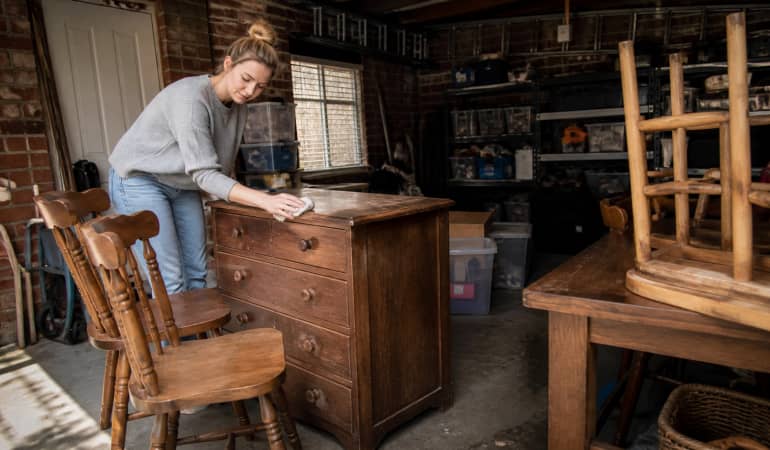
You’ve got a beautiful wooden dresser, a solid oak dining table, or maybe a set of garden chairs you want to keep safe over winter. The garage seems like the obvious solution. Plenty of space, out of the way, job done. But storing wooden furniture in a garage isn’t quite as straightforward as just wheeling it in and shutting the door.
Wood reacts to everything around it. Temperature swings, moisture in the air, cold concrete floors — all of these can cause real damage over time. Warping, cracking, mould, and pest damage are all genuine risks when furniture isn’t stored properly.
The good news is that with the right approach, your garage can be a perfectly safe long-term storage space for wooden furniture. Here’s exactly how to do it.
TL;DR
- Keep wooden furniture dry and off the floor to prevent moisture damage and warping.
- Aim for a garage humidity level between 30% and 50% year-round.
- Clean, dry, and apply a protective finish to furniture before storing it long-term.
- Adjust your storage approach each season to account for cold, heat, and humidity changes.
- Use breathable covers to guard against dust, scratches, and light exposure.
- Inspect stored furniture regularly for signs of mould, pests, or structural damage.
- Disassemble large pieces where possible to reduce stress on joints and save space.
Table of Contents
How Do You Store Wooden Furniture Safely in a Garage?
The safest way to store wooden furniture in a garage is to control the environment it sits in. Wood expands and contracts with changes in temperature and humidity, so keeping those conditions stable is the single most important thing you can do. Aim to maintain humidity between 30% and 50%, keep the space reasonably insulated, and always lift furniture off the concrete floor to stop moisture from wicking upwards.
Concrete floors are cold and often damp, especially in older garages. If your furniture sits directly on the floor, even for a few months, moisture can seep into the wood from below. That leads to swelling, warping, and eventually mould. It’s one of the most common mistakes people make, and it’s completely avoidable.
A few practical steps make a big difference here:
- Place furniture on wooden pallets, rubber feet, or purpose-built shelving to keep it off the floor.
- Fit a dehumidifier if your garage tends to feel damp, especially in autumn and winter.
- Insulate the garage walls and ceiling if possible. Even basic insulation reduces temperature swings significantly.
- Use a hygrometer to monitor humidity levels so you’re not guessing.
- Keep furniture away from garage doors and external walls where temperature changes are most extreme.
Organisation matters too. A well-arranged garage means you can actually get to your furniture without dragging everything out. Use shelving units along the walls for smaller items and accessories, keep larger pieces towards the centre or back, and make sure nothing is stacked directly on top of wooden surfaces. A bit of planning upfront saves a lot of frustration later.
How Should You Prepare Wooden Furniture for Long-Term Garage Storage?
How you prep your furniture before it goes into storage is just as important as the conditions it sits in. Rushing this stage is where most damage actually starts. Follow these steps before anything goes into the garage.
Follow these steps to prepare wooden furniture properly before placing it in long-term garage storage.
Clean and dry the furniture thoroughly
Wipe down all surfaces with a slightly damp cloth to remove dust, grease, and grime. Then let the furniture dry completely. Any trapped moisture sealed under a cover or protective finish will encourage mould. Leave it in a warm room for at least 24 hours before moving it to the garage.
Disassemble removable parts
Take off any legs, shelves, drawers, or detachable panels. This reduces the overall footprint of each piece, makes it easier to move, and takes pressure off joints that can weaken over time in storage. Keep all fixings in labelled bags taped securely to the relevant piece so nothing goes missing.
Apply a protective finish or wax
A coat of furniture wax or a wood-specific sealant adds a layer of defence against moisture and minor pest activity. Pay extra attention to any exposed end grain, which absorbs moisture faster than the rest of the surface. Allow the finish to cure fully before wrapping or covering anything.
Wrap items in breathable covers or blankets
Use breathable furniture covers, old cotton sheets, or moving blankets to wrap each piece. Avoid plastic sheeting directly against the wood. It traps moisture and creates a humid environment that does exactly the kind of damage you’re trying to prevent. Breathable materials let the wood air slightly while still protecting against dust and scratches.
Check also:
How Do Seasonal Changes Affect Wooden Furniture in a Garage?
Seasonal changes are one of the biggest threats to wooden furniture stored in a garage. In winter, cold and dry air causes wood to contract and crack. In summer, heat and humidity make it expand and warp. Spring and autumn bring fluctuating humidity that’s particularly tough on joints and finishes. Adjusting your storage practices with the seasons is the best way to prevent damage across the year.
Most people set up their storage once and forget about it. That’s a mistake. What works in July doesn’t necessarily work in January, and your garage conditions shift more than you’d think between seasons.
Winter
Cold temperatures cause wood to contract, and in severe cases that leads to splitting along the grain. The air also tends to be drier, which strips moisture from the wood itself. Use thermal or insulating covers on larger pieces, keep furniture away from draughts near garage doors, and consider a small space heater on a timer if temperatures regularly drop below freezing.
Spring and Autumn
These are the trickiest seasons. Humidity fluctuates a lot, which means wood is constantly expanding and contracting. This puts serious strain on joints, veneers, and any surface finish. Run your dehumidifier more regularly during these months and check on your furniture more often than you would in summer.
Summer
Heat is less of a structural threat than moisture, but direct sunlight through garage windows or a glazed door will bleach and dry out wood surfaces quickly. Use light-blocking covers on any furniture that might catch the sun. Ventilate the garage on cooler days to stop heat from building up. If it feels stuffy in there, your furniture is sitting in that same stuffiness.
Check also:
Protecting Wooden Furniture in a Garage from Damp and Cold
Damp is the number one enemy of wooden furniture in storage. Your garage doesn’t have to be visibly wet for damage to happen. A consistently high humidity level above 60% is enough to trigger mould growth, weaken glue joints, and cause surface finishes to bubble or peel. Cold makes things worse by slowing the evaporation of any moisture that does get in.
Here’s what actually works to keep damp and cold under control:
- Monitor humidity with a digital hygrometer and keep levels consistently between 30% and 50%.
- Use moisture absorbers placed near furniture, especially in corners where air circulation is limited.
- Run a dehumidifier regularly during wet months. In most parts of the UK, that means autumn through to early spring.
- Keep furniture elevated on pallets or shelving, never directly on concrete.
- Seal any obvious gaps around the garage door or windows to reduce draughts and stop external moisture getting in.
- Inspect stored furniture every four to six weeks for early signs of mould, soft spots, or discolouration.
If you do spot mould starting to form, deal with it immediately. A small patch treated quickly rarely causes lasting damage. Left for a season, it can spread through the grain and become very difficult to reverse. The same goes for pest activity. Wood-boring insects like woodworm are genuinely present in the UK and do target stored furniture. If you see small round holes or fine dust around the base of a piece, that’s a problem that needs addressing fast.
If you’re storing a large amount of furniture and your garage simply can’t be made dry or stable enough, a storage service provides climate-controlled spaces purpose-built for exactly this kind of long-term care.
Need help moving furniture into storage?
Let's Get in TouchFor questions about the services we offer visit our main site or you can always call us at 020 3746 0584
Quick Reference: Seasonal Storage Conditions at a Glance
The table below gives you a practical summary of what to watch for and what to do across each season when storing wooden furniture in a garage.
| Season | Main Risk | Key Action | |
|---|---|---|---|
| Winter | Cold, dryness, cracking | Use thermal covers, block draughts, avoid contact with exterior walls | |
| Spring | Fluctuating humidity | Run dehumidifier more often, check joints and veneers regularly | |
| Summer | Heat build-up, UV exposure | Ventilate garage, use light-blocking covers on exposed pieces | |
| Autumn | Rising damp, temperature drops | Inspect for mould, add moisture absorbers, re-check insulation |
Check also:
Frequently Asked Questions
What materials work best for covering wooden furniture in a garage?
Breathable materials are the right choice. Cotton dust sheets, moving blankets, or purpose-made fabric furniture covers all work well. These let a small amount of airflow reach the wood, which prevents moisture from becoming trapped underneath. Avoid wrapping furniture in plastic sheeting directly against the surface, as this creates a humid environment that encourages mould and can cause finishes to lift over time.
Can I store wooden furniture in a garage without climate control?
You can, but you’ll need to manage conditions manually. Use moisture absorbers, keep furniture elevated, inspect regularly, and use breathable covers. An uninsulated, unheated garage poses a real risk in a UK winter, so the less climate control you have, the more hands-on you’ll need to be. For valuable or antique pieces, a climate-controlled space is genuinely the safer option.
How often should I check on wooden furniture in storage?
Every four to six weeks is a sensible routine for most situations. During autumn and winter, increase that to every two to three weeks. This is when moisture and temperature changes are at their most damaging. During each check, look for soft or discoloured patches, small holes or dust that might indicate insect activity, and any signs that covers have slipped or moisture has got underneath.
What are the signs of damage that need immediate attention?
Act quickly if you spot any of the following: dark or fuzzy patches on the surface (mould), small round holes with fine powder nearby (woodworm), soft or spongy areas in the wood (rot from sustained moisture), joints pulling apart or veneer bubbling (moisture damage), or a persistent musty smell from the furniture itself. Any of these caught early can usually be treated without permanent loss.
Is it necessary to oil wooden furniture before putting it in storage?
Oiling isn’t strictly necessary for all wood types, but it’s a smart step for most solid wood furniture, particularly if it’s going into storage for more than a few months. A suitable oil or wax finish conditions the wood, helps it resist moisture absorption, and keeps the surface from drying out and cracking. Always let it absorb and cure fully before wrapping the piece up.
Find a safe storage solution for your wooden furniture today.
Enter your postcode to view our rates and availability in your area.
For questions about the services we offer visit our main site or you can always call us at 020 3746 0584
Conclusion
Storing wooden furniture in a garage can work brilliantly, but only if you take the environment seriously. Keep humidity in check, lift furniture off the floor, prep each piece properly before it goes in, and adjust what you’re doing as the seasons change. None of this is complicated, but skipping any step creates the conditions where damage quietly takes hold.
Check in on your furniture regularly rather than leaving it untouched for months. A quick look every few weeks is all it takes to catch problems before they become expensive ones. Do the groundwork right, and your furniture will come out of storage in exactly the same condition it went in.
How helpful is this article?

 Loading...