
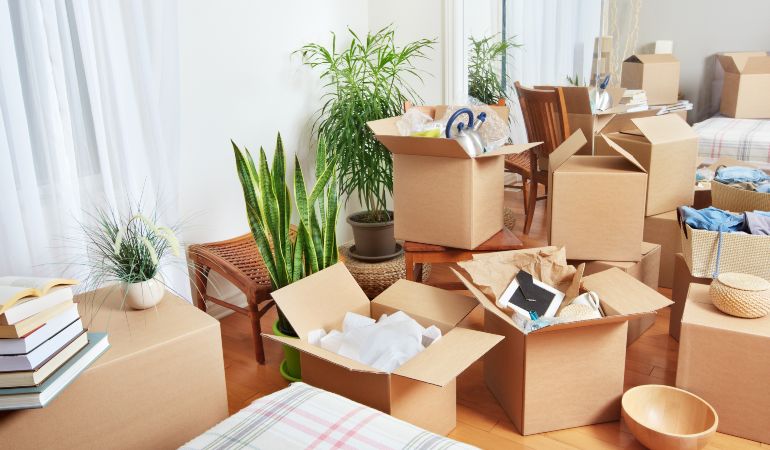
Moving house is hard enough with pets, but moving with plants adds its own layer of complexity. Whether you’re relocating a few pots from a windowsill or an entire garden, there are some important things to get right before the van arrives.
That is why, as part of our moving advice articles, we’ll share essential tips on how to move plants safely during your house relocation, ensuring they arrive at your new home healthy and thriving.
TL;DR
- Move outdoor and garden plants during their dormant period (October, February) to reduce transplant shock.
- Re-pot into shatterproof containers before moving day so plants can settle ahead of the stress of transit.
- Wrap pots in bubble cushioning; fill box gaps with paper towels or newspaper; punch ventilation holes in the lid.
- Keep plants in the passenger compartment of the vehicle, not the boot, temperature swings in an enclosed boot can cause damage within minutes.
- After arrival, let plants acclimatise in a spot with moderate light for a few days before repositioning; hold off feeding or repotting for two weeks.
Table of Contents
Plan the moving of your plants
Understand your plants’ dormant periods
The best time to move plants is during their dormant period, typically between October and February for many outdoor and garden species. Dormancy is the phase when a plant slows its metabolic activity, conserving energy rather than actively growing. Moving during this phase reduces the risk of shock and helps your plants adapt more easily to their new environment.
Check for soil and climate compatibility
If you are moving to a different climate zone, check whether your plants can make it through in the new soil and weather. Researching this beforehand can save you the disappointment of losing plants that aren’t suited to the new location. If a plant isn’t likely to survive in the new environment, it may be better to leave it behind.
Plan for large plants and garden relocations
If you have a few pots, you just have to find them a place in the van. But if you’re moving large plants or the entire garden, you need serious organisation. For large shrubs and trees, keep the root ball intact and wrap it in damp hessian or burlap before potting, this protects the root structure during transit and gives the plant the best chance of re-establishing quickly. This might also require visiting your new home in advance to map out the planting areas. Large garden moves may require professional help to ensure everything is done correctly.
You may also like: Green Thumb’s Guide: How to Pack Plants for a Safe Move
Pack your house plants
How to pack houseplants safely for a move, from re-potting to sealing and labelling the box.
Prepare your plants for relocation
Three to four weeks prior to your move, transfer your houseplants into shatterproof containers. This advanced re-potting allows your plants to acclimate to their new pots, minimising the stress they experience during the moving process.
Trim your houseplants
About a week after repotting, consider trimming your houseplants if necessary. Take the opportunity to remove any dead leaves at this stage, it reduces the risk of disease spreading during transit and makes packing considerably easier. Reducing overall size will also decrease the likelihood of leaf drop on the move.
Wrap the pot with bubble cushioning
When it’s time to pack your houseplants, start by wrapping the pot in bubble cushioning. You may also place the pot inside a plastic bag to prevent soil spillage during transit. Be sure to only wrap the pot, leaving the plant itself exposed.
Place your plant in a cardboard box
Begin by securing the bottom of the box with tape to ensure it is stable. Then, carefully position your plant (or several plants if the box permits) inside the box.
Include protective materials
Once your plant is in the cardboard box, fill any empty spaces with protective materials such as paper towels, old newspapers, sturdy paper, or packing peanuts. Paper towels are particularly useful for cushioning fragile stems without adding excess bulk. Ensure that your plants are well-secured to prevent them from tipping over or falling out during the move.
Seal, label, and create ventilation holes
Use strong packing tape to seal your box, then make a few holes in the top and sides with scissors to allow air and light to reach your plants. Clearly label the box with the intended room for the plant in your new home. If you have multiple plants, consider adding a brief description for easy identification, such as “succulents for bathroom” or “cheese plant for kitchen”.
If you are relocating in cold weather, consider acquiring a substantial amount of horticultural fleece. Gently wrap your plants in this material prior to placing them in boxes. Temperatures dropping below approximately 5 degrees can harm most tropical houseplants, so it is essential to reduce their exposure to harsh outdoor conditions.
You may also like: Where to Get Free Cardboard Boxes
Transportation
During a house move, keep plants in the passenger compartment of the vehicle rather than the boot, temperature swings in an enclosed boot can reach damaging extremes within minutes, particularly on warm or cold days.
During transportation, temperature and light conditions can affect your plants. Therefore, avoid exposing your plants to extreme temperatures. Keep the moving vehicle at a moderate temperature and avoid placing plants in the boot where it can get too hot or cold.
If the journey is long, try to position the plants where they can get some natural light, but avoid direct sunlight, which can scorch the leaves.
Unpack your plants
While unpacking can be a tedious task, it is essential to prioritise your plants as soon as you arrive at your new home. Ensure that they are unpacked promptly, as they do not thrive in darkness. However, don’t rush to place them in their final location immediately.
Create a serene environment
It is important to provide a calm and stable environment for your plants. They require neutral space to acclimate comfortably. Arrange them together in an area with moderate light, avoiding direct sunlight while ensuring it is not overly shaded. Instead of watering them right away, give them a light misting. When you do water them, do so gently, avoiding excessive soaking. Keep them in this designated spot for a few days to allow them to settle before repositioning.
Don’t feed them immediately
As your plants adapt to their new environment, it is essential to minimise any potential stress. This entails postponing feeding, pruning, or repotting for a minimum of two weeks.
Engaging in these activities could stimulate growth in your plants, which is undesirable during their adjustment period. Give them the time they need to acclimate to their new surroundings. Soon enough, both you and your plants will feel at ease in your new setting.
Read also: How to Pack Garden Tools for Moving
How to move house plants long-distance
When the designated moving day is here, and especially if your trip is going to be a long one, such as moving to Germany from the UK, you would have to prepare your plants well. Here is how to move houseplants across the country or even further.
- Place plants in appropriate pots. See the planning section above for guidance on pot selection and root ball preparation. For a whole garden move, allow at least a day to get everything into suitable containers before loading day.
- Label all pots. Put a label on each with information about soil preference and where it would go in the new garden. This will make unloading and organising at the new garden a lot easier.
- Designate a place in the van for each pot. Some plants need sunlight more than others and it’s a good idea for you to know where to put each in order to make their trip comfortable.
- Keep pots in a dry place for a week. A week before the moving day, your plants need to breathe some dry air. Plants usually make the indoor air moist, and it’s not a good idea to leave packed cardboard boxes near them.
- Spray the plants with water. On moving day it’s better to spray them instead of watering. This is only done in a dry climate. See below what to do in heat and frost.
- Put the plants in newspaper for protection. Once your plant is securely placed in the cardboard moving box, surround it with protective materials, you can use old newspapers or sturdy paper. It’s crucial to secure the plants properly to prevent them from tipping over or falling out of the box.
Book Fantastic Removals for an easy move!
Enter your postcode to view our rates and availability in your area.
For questions about the services we offer visit our main site or you can always call us at 020 3746 0584
How to move house with plants in hot weather
If you happen to move in the hottest months and can’t afford to wait, you should know that your plants might suffer badly. Especially, if you take them out of a cooled house and into scorching heat. To make the temperature bearable for your plants during the removals, here’s what you can do.
- Keep plants shaded. Place your plants in a shaded area of the moving van to prevent exposure to direct sunlight, which can scorch leaves and stress the plants. A few hours of darkness won’t harm them, but excessive heat can be deadly.
- Hydrate regularly. If possible, stop every couple of hours to lightly water your plants. This keeps them hydrated and cool during the journey.
- Add a layer of mulch. Mulching not only provides nutrients to your plants but also retains moisture for an extended period which helps keep the plants cooler.
- Place water granules in the pots. If you’re not able to stop and water your plants, you can use water granules. They release moisture slowly over time, providing a consistent source of hydration.
How to move house with plants in cold weather
Moving house with plants during cold weather presents another extreme that your plants need protection from. Learn here what you can do to safeguard them from frostbite and other adverse effects.
- Place the plants near the windows. If the moving van has windows, place plants near them to take advantage of any sunlight, which can help keep them warm.
- Insulate with mulch. Mulch not only keeps moisture for a longer period but also acts as an insulator, holding in heat in the soil.
- Cover your plants. Throw a blanket, drop cloth, or tarp over your plants. Make sure it’s not nylon or plastic sheets, as those also keep the oxygen out and your plant might suffocate. Ensure the covering doesn’t touch the leaves to avoid frost damage.
- Water your plants. Soil can trap heat inside, and it does it way better when wet. However, avoid watering if the soil is frozen, as this can cause damage.
- Use a heater. If possible, use a portable heater in the vehicle’s compartment during transportation of the plants. However, be cautious and monitor the heater to prevent overheating.
Read also: How to Move House During Winter
Frequently Asked Questions
How do I keep soil in the pot when moving?
Cover the soil surface with a damp paper towel held in place with a rubber band around the pot, or place the whole pot inside a tied plastic bag before boxing it up. This prevents spills without compressing or damaging the root ball.
What plants can I not move across UK borders?
Moving regulated plants within the UK mainland typically requires a UK plant passport issued by an authorised operator. Moving plants to or from Northern Ireland, the Channel Islands, or internationally may require a phytosanitary certificate due to biosecurity rules. Check with APHA (Animal and Plant Health Agency) before any cross-border move.
How long can plants survive in a moving box?
How long houseplants can tolerate being in a ventilated box before suffering significant stress can vary considerably depending on the species and conditions. For moves longer than a day, open boxes at every stop, mist lightly, and avoid leaving plants boxed overnight in a cold or unventilated vehicle.
Conclusion
If you’re moving in autumn, there’s actually a natural advantage built in: many garden plants are already heading into dormancy, which means less shock, easier root ball handling, and a faster recovery once they’re in the ground at the other end. That timing benefit is worth planning around if your move date is at all flexible. The core principle throughout this guide is the same regardless of season: the work that matters most happens in the weeks before the van arrives, not on the day itself.
Get the re-potting done early, protect the roots, pack carefully, and give your plants a quiet few days to settle once you’re in. Do that, and most plants will come through a house move in better shape than you’d expect.