Moving a fridge freezer safely takes more preparation than most people expect. Whether you’re shifting it to another room or loading it into a van for a house move, this guide walks you through every step, from defrosting and disconnecting to transporting and replugging. We’ve helped hundreds of customers move their houses, and moving fridge freezers is one of the most common challenges we see go wrong. Here’s how to get it right.
TL;DR
- Always transport a fridge freezer upright where possible, this protects the compressor and sealed system.
- For a house move or long journey, defrost and unplug at least 12–24 hours beforehand to prevent water damage.
- If transported upright, wait at least as long as the journey took before replugging, typically 1–2 hours minimum.
- If transported on its side, leave it standing upright for 24 hours before switching it on.
- Never lay it on its back. If tipping is unavoidable, lay it opposite to the direction the door opens.
- Remove and wrap all loose shelves, drawers, and the ice bin before moving. Tape or strap the door shut.
- After replugging, allow several hours for it to reach working temperature before loading food back in.
Table of Contents
How to move a fridge freezer, step by step
A safe, sequential process for moving a fridge freezer, covering preparation, transport, and reinstallation.
Defrost and empty the fridge freezer
Turn the fridge freezer off and empty it completely. Move food into a cooler bag with plenty of ice. If the freezer compartment is heavily iced, allow a full 24 hours for defrosting. For a lightly iced freezer, 12 hours is usually enough. Leave the doors open and lay towels down to soak up meltwater.
Unplug and disconnect the water line
Pull the mains plug rather than the cable. If your model has a water line feeding an ice maker, turn off the water supply the day before the move and disconnect the line at the back of the appliance before moving it.
Remove and wrap loose internal parts
Take out all shelves, drawers, and the ice bin. Wrap each one individually in protective material to prevent cracking during transit. Tape or rubber-band the wrapped parts together so nothing shifts inside the removal vehicle.
Secure the door
Use tape or a strap to hold the fridge freezer door shut during the move. An unsecured door can swing open unexpectedly, causing injury or damage to the appliance and anything nearby.
Prepare the floor and adjust the legs
Lay a thin layer of cardboard or synthetic padding on the floor along the route you’ll be moving the fridge. Raise the appliance legs to their maximum height, this makes rolling it easier and reduces the risk of scratching the floor beneath it.
Load upright, or tip carefully if you must
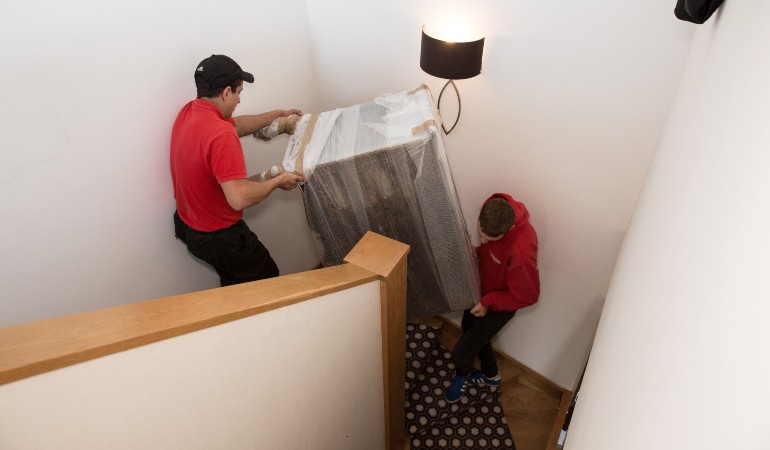
Keep the fridge freezer upright throughout loading and transport wherever possible. If the space genuinely doesn’t allow it, lay it opposite to the direction the door opens, this prevents the door from swinging open under its own weight. Never lay it on its back. For very large or heavy models, a dolly is the safest option. If you need professional help with a large or heavy appliance, a house removals service can handle the heavy lifting safely.
Stand upright at the destination and wait
Once the fridge freezer is at its new location, stand it fully upright. If it was transported upright throughout, wait at least as long as the journey took before plugging it in, a minimum of 1 hour. If it was transported on its side at any point, leave it standing upright for 24 hours. This allows compressor oil to settle back into place.
Replug, set the temperature, and wait before loading food
Insert the mains plug and set the temperature to the recommended settings (typically +4°C for the fridge, -18°C for the freezer). Allow several hours for the appliance to reach working temperature before putting food back in.
When to turn off and defrost a fridge freezer before moving
Turning a fridge freezer off before moving is essential, both for protecting the appliance and for keeping your food safe. When you do it depends on the type of move you’re making.
For a short move within the same building, defrosting is usually not necessary. For a house move or long-distance transport, defrost at least 12–24 hours before the move to avoid water damage and compressor strain.
- If transportation will last long and food will defrost during the journey, turn the fridge off at least a few hours before the move to give it time to unfreeze fully
- While defrosting, soak up any water that drains from the freezer compartment. Move all frozen food into a cooler bag where it will stay preserved until you reinstall the fridge at the new address
If the temperature settings are very low and there’s a heavy build-up of ice inside, defrosting can take a full day. Turn it off the evening before your move to be safe.
How long to leave a fridge freezer after moving it
If transported upright, wait at least as long as it spent in the vehicle before replugging, typically 1–2 hours minimum. If transported on its side, leave it standing upright for 24 hours before plugging in. This allows compressor oil to settle back into place and prevents damage to the sealed system.
The exact time isn’t fixed. It depends on the manufacturer’s recommendations and whether the appliance is brand new or has been in regular use. Always check your model’s manual if you’re unsure.
If you had to lay your fridge on its side just for a few minutes during a clean-up, you don’t need to wait the full 24 hours before replugging. A short rest of a few minutes is enough in that situation.
Moving a fridge freezer from one room to another
During property renovation, people often need to move their fridges and store their freezers from one room to another. It’s a necessary change, but it can affect your budget heavily if something goes wrong.
For a short move within the same home, defrosting is usually unnecessary, just make sure the appliance stays upright and the route is clear. Take careful measurements of doorways, corridors, and any tight turns before you start. Knowing the exact route in advance makes the whole job much simpler.
Check also: How to Store a Fridge
Check the instructions in the manual for your specific fridge model if there are any additional recommendations when moving a fridge from one room to another in apartments and larger properties.
Moving a second-hand fridge freezer
Second-hand fridge freezers need a little extra attention before and during the move. Here’s what to focus on:
- Transport it upright, this is the correct method regardless of age and protects the compressor from damage
- Re-adjust temperature settings once reinstalled. The optimal settings are usually marked on the appliance and represent the best balance of performance and energy use
- Check the condenser coils at the rear bottom of the fridge for signs of damage or heavy dirt build-up before moving
Moving a fridge freezer to clean behind
Regularly cleaning behind and underneath your fridge is worth doing at least once a year. In a heavily polluted area, twice a year is better. It prolongs the life of the appliance and keeps dust from building up on the coils and condenser.
Some models require full disconnection and defrosting before cleaning. More modern fridges use frost-free technology, which means the freezer compartment doesn’t build up ice, so unplugging before a routine clean isn’t always necessary. Check your model’s manual to confirm which applies to yours.
Regularly moving your fridge for a thorough clean-up helps you reach hidden spots and is one of the most effective ways to prolong its working life while keeping hygiene at a high standard.
General tips for a successful fridge freezer cleaning
Before or after a move is an ideal moment to clean the appliance thoroughly. Here’s how to do it safely for most fridge freezer models:
- Search for the steps of this procedure in the manual of your fridge. If you can’t find it, proceed with these basic steps that would do a good job for the majority of fridge freezer models
- Prepare a cooler where you will store all frozen food during the cleaning of the fridge. Make sure there’s plenty of ice for at least 24 hours
- Turn off the fridge
- Disconnect it from the water pipe that fills the ice maker (if your fridge model has one)
- Lay a thin layer of synthetic or cardboard material on the floor on which you will move the fridge to protect the floor from damage
- Remove and empty the drip pan from the fridge’s bottom. Leave it in water filled with a cleaning agent to easily remove any dirt afterwards
- Carefully put the fridge freezer on top of the padding with its legs adjusted to their maximum height. This will help you to vacuum under the fridge with greater ease. Don’t skip the place where you will later return the freezer, remove all dust and fine particles from its spot to make sure it will be put back in a cleaner environment
- Slide the refrigerator back to its place while taking extra care of all cables and loose parts that may catch during the move
- Re-install the drip pan and anything else you have removed for a more productive clean-up
- Re-adjust the legs of the fridge freezer to their optimal settings
- Clean the fridge from the inside before filling it up again. Use safe antibacterial agents and make sure whatever you put back in it is not spoiled
Brand-specific tips when moving your fridge freezer
Most of the guidance above applies regardless of brand. That said, a few manufacturers have specific instructions worth knowing before you move. Always download the manual for your exact model, the tips below cover the most move-relevant details for the most common brands.
Zanussi
The freezer compartment on Zanussi fridge freezers is frost-free, so ice doesn’t build up inside. This means defrosting before a move is generally not required. When turning the appliance off, disconnect it from the mains, clear all food and drink, clean the interior, and leave the doors open to prevent odours building up.
Before the first use after reinstallation, keep the fridge upright and wait 4 hours before switching it on. Always lift from the front edge when moving to avoid scratches. Find the manual for your model at the Zanussi support page.
Whirlpool
If your Whirlpool fridge has an automatic ice maker, turn off the water supply the day before the move. Disconnect the water line at the back of the appliance. Empty the ice bin completely. Adjust the front legs before moving to make rolling easier, the settings for a static position differ from those needed during transit. Find the manual for your specific model in the user manuals section of the Whirlpool website.
Bosch
After reinstalling a Bosch fridge freezer, insert the mains cable, plug it in, and press the alarm button to silence the alarm signal. Allow several hours for the appliance to reach +4°C before adding any food. Do not fill it to 100% capacity, this blocks the airflow needed for efficient cooling. Find the instruction manual for your model on the Bosch UK support page.
Hotpoint
Once your Hotpoint fridge freezer is in its new position, stand it fully upright and wait at least 3 hours before switching it on if it has been in a vehicle for a long journey. When cleaning before the move, use a damp sponge only, avoid abrasive materials, ammonia-based products, or bleach on any surface. Always clean while the appliance is fully unplugged.
For model-specific guidance, refer to the Hotpoint support section on the Whirlpool UK website, the Hotpoint-specific PDF link previously referenced here should be verified before use, as CDN-hosted manual URLs change frequently.
Daewoo
After installing a Daewoo fridge freezer, allow 2–3 hours minimum before it reaches a safe food storage temperature. Hot weather may add to this time. Use a dedicated, properly earthed socket, do not share it with other appliances or use an extension lead. If you notice unusual noises, smells, or visible sparks after reinstallation, turn it off immediately and contact a certified technician before using it again.
Plugging in a Daewoo fridge freezer for the first time may produce a faint plastic-like smell during the first few days of use. This is normal and doesn’t require any inspection or repair.
For Daewoo fridge freezer manuals, search your model number directly on the Daewoo Electronics support site or use a search engine with your model number, third-party aggregator links for this brand are frequently outdated.
Miele
Turn off the water supply 2–3 hours before switching off a Miele fridge freezer. Remove any water or ice from the ice container. Wipe the interior with a clean damp cloth, leave the doors open, and change the water filter if fitted to prevent odours during storage or transit.
Samsung
Most Samsung fridge freezers contain isobutane refrigerant, a natural gas that can be flammable. If you notice an unusual smell coming from the appliance at any point, do not use it, contact a qualified technician to inspect it. During the move, take extra care of the water hose at the rear of the appliance and protect the refrigerating circuit parts from contact with anything sharp or heavy.
For cleaning before the move, unplug the fridge, wipe the interior with a soft damp cloth, and follow immediately with a dry cloth to remove all moisture. For model-specific guidance, visit the Samsung UK support page and search by your model number.
Check also:
Frequently Asked Questions
Can you lay a fridge freezer down to move it?
Yes, but only as a last resort. If you have to tip it, lay it opposite to the direction the door opens, this stops the door from swinging open under its own weight. After any transport on its side, stand it fully upright and leave it for 24 hours before plugging in. This gives the compressor oil time to settle back into place.
Can you move a fridge freezer without defrosting it?
For a short move within the same home, yes, defrosting is usually unnecessary. For a house move or a long journey, defrost at least 12–24 hours beforehand. Skipping this step risks water spillage during transit and can put strain on the compressor.
How long to defrost a fridge freezer before moving?
Allow at least 12 hours. If the freezer compartment is heavily iced, plan for a full 24 hours. Turn it off, leave the doors open, and use towels to soak up the meltwater as it drains. Move food into a cooler bag with ice to keep it safe while you wait.
Can you plug a fridge freezer in after moving it?
Yes, once it has been standing upright for the right amount of time. If transported upright throughout, wait at least 1–2 hours before replugging. If it was on its side at any point, wait 24 hours. Most manufacturers recommend a minimum of 1–4 hours as standard, but always check your model’s manual for the specific guidance.
Need help moving appliances and other heavy things?
Get in touch with expert movers!
For questions about the services we offer visit our main site or you can always call us at 020 3746 0584
Conclusion
Moving a fridge freezer safely comes down to three things: preparing properly beforehand, keeping it upright during transit where possible, and giving it the right amount of time to settle before you plug it back in. Get those three right and the rest follows naturally.
If you’re dealing with a particularly large appliance or a tricky property layout, it’s worth getting professional help rather than risking injury or damage to the unit. Either way, the steps above will keep you on the right track.