
Picking your moving date sounds straightforward until you realise how many things actually shape it. If you’re buying, your legal completion date sets the clock. If you’re renting, your tenancy end date and notice period are the starting point. Layer in removal company availability, the school calendar, and your own work commitments, and there’s real planning to do. This guide walks you through every factor, in the order most people face them, so you can lock in a date with confidence. For the heavy lifting itself, a professional removal company will save you far more than a slipped disc. And once you have the date fixed, our packing tips will help you get everything ready in time.
TL;DR
- If you’re buying, your moving date is usually tied to your legal completion date, not a free choice.
- Book your removal company speculatively before exchange, then confirm the moment exchange happens.
- Tuesday, Wednesday, and Thursday are typically the cheapest and easiest days to book.
- Spring and autumn offer the best balance of availability and reasonable weather for UK moves.
- After moving, update your address with DVLA, HMRC, your bank, and the electoral roll as a priority.
Table of Contents
Is completion day your moving day?
Not always. Completion day is when ownership of the property legally transfers to you. For most buyers in a chain, completion and moving happen on the same day simply because that is the most practical arrangement. But if the property is vacant, you can negotiate a gap of a few days between the two.
It helps to understand the timeline. Exchange of contracts fixes your completion date in place. In a chain, the gap between exchange and completion is typically one to four weeks, agreed by both sets of solicitors. For a straightforward first-time buyer purchase with no chain, it can be as little as seven days. Until exchange happens, your completion date is not legally binding, which means your moving date is not confirmed either.
The practical implication: book your removal company speculatively as soon as you have a likely completion window, and confirm the booking the moment exchange takes place. Removal firms fill up quickly around popular completion days, particularly Fridays. If you wait until after exchange to start looking, you may find your preferred company is already taken.
Choosing a day if you are a renter or buyer

If you are renting your next place, plan the moving date well ahead. Read the contract thoroughly and be aware of clauses that involve any work that has to be done in the property you are leaving. You might have to book a professional end-of-tenancy cleaning in order to get your deposit back.
If you’ve lived there for a long time, there might also be a need for some cosmetic alterations: repainting wall spots, plastering holes, or attaching cupboards back to their original place. Understanding the timelines of your previous commitment and any waiting times at your new home will help you outline the move-out plan. Sometimes key exchanges happen at the last moment, so make sure you have the dates pinned with your removal company.
If you are buying, your flexibility is narrow once completion is set. Track your removal company booking to your exchange date, not your anticipated completion date, and you won’t get caught short.
How to choose a moving date
The best moving date balances your legal completion or tenancy dates, your removal company’s availability, the season, school terms, and personal commitments, roughly in that order of priority for most people. Everything else flows from those five factors. Here is how each one plays out in practice.
Considering the seasons when picking a moving date
There are two ways to think about season: cost and convenience. In winter, demand for removal services drops, so availability is better and quotes are often lower. The trade-off is unpredictable weather, shorter days, and icy conditions that can slow a move down.
Spring is often the sweet spot. Demand has not yet reached its summer peak, the weather is improving, and you have more room to negotiate on dates. Autumn, particularly September and October, offers similar conditions.
Summer is the busiest period by a wide margin. If you are moving between June and August, book your removal company at least 4–6 weeks ahead. Fridays and the final days of the school summer holidays fill up fastest. The good weather and school-free schedules make summer moves appealing, but they come at a premium in both price and availability.
Picking a day of the week for removals
Tuesday, Wednesday, and Thursday are typically the cheapest days to book a removal company. Friday is the most in-demand day because chains completing on a Friday mean removal firms are fully booked well in advance. If your solicitor is pushing for a Friday completion, factor that into your removal search earlier than you think you need to.
Sunday is the least popular day for good reason. Arriving with a van full of boxes and no time to unpack before the working week starts is genuinely stressful. If you can, take a couple of days off around your move so you have time to settle in properly rather than living out of boxes until the following weekend.
Are you starting a new job on a specific date?
If you have found a new job and you have to relocate for it, settling in before the stress of a new workplace weighs on your shoulders has to be your priority. Having that start date in mind gives you a firm deadline to work backwards from, which is actually useful. You do what you have to do, and that focus tends to make the planning easier, not harder.
Is the school year a factor when planning to relocate?
If you have children, aim to move during a school holiday rather than term time. You avoid disrupting their routine at a point when exams or coursework deadlines may already be adding pressure. When possible, the summer holidays give the most time to settle before a new school year starts.
Make sure you have secured the new school place beforehand. Changing schools is a significant transition for children, and having that confirmed before moving day removes one major source of uncertainty for the whole family.
How to be ready for moving day
A step-by-step checklist of what to do before, during, and immediately after moving day to make the process as smooth as possible.
Wake up early and welcome the movers
Give yourself at least an hour before the removal team arrives. Use the time to do a final walk-through, check all rooms are clear, and make sure nothing has been left behind in cupboards, lofts, or under beds.
Charge all essential electronics
Phones, laptops, and portable chargers should be fully charged the night before. Once the removal team arrives, your attention will be elsewhere, and you will want communication lines open throughout the day.
Dress for the job
Wear comfortable, practical clothes and sturdy footwear. Even if you have hired a full packing service, you will be on your feet for most of the day.
Keep a first-night box to hand
Pack a separate box or bag with everything you will need for the first 24 hours: toiletries, a change of clothes, kettle, mugs, tea and coffee, phone charger, and any medication. Load it last so it comes off the van first.
Take valuables with you personally
Jewellery, important documents (passports, mortgage paperwork, tenancy agreements), and anything irreplaceable should travel with you in your car or bag, not on the removal van.
Update your address with key organisations
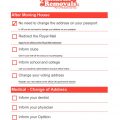
As soon as you are in, start notifying the organisations that matter most. Prioritise DVLA (driving licence and V5C logbook), HMRC, your bank, your GP, and the electoral roll. Also update your employer, any subscription services, and your passport records if you are moving permanently.
Just a hint – keep a bottle opener in your handbag so it’s handy if you would like to pop a bottle on your first evening in the new place. You will thank yourself later.
Removals company in London, what extra services do they offer?
- Wrapping and packing
- Unpacking
- Short and long-term storage
- Cleaning and handyman tasks
- international removals
Frequently Asked Questions
Is completion day the same as moving day?
Not always. Completion is when ownership of the property legally transfers to you. Most buyers in a chain complete and move on the same day because it is the most practical option, but you can negotiate a gap of a few days if the property is vacant. The two events are legally separate even when they happen to fall on the same date.
What address do I need to change when I move?
Prioritise DVLA (driving licence and V5C vehicle logbook), HMRC, your bank, your GP, and the electoral roll. You should also update your employer, your passport records if you are moving permanently, and any subscription services or regular deliveries. Setting up a Royal Mail redirection for 6–12 months catches anything you miss.
How long after exchange of contracts is completion?
Typically one to four weeks for buyers in a chain, with the exact gap agreed by both parties’ solicitors at the point of exchange. For a straightforward first-time buyer purchase with no chain, it can be as little as seven days. Until exchange happens, no completion date is legally binding.
Conclusion
For most buyers, choosing a moving date is not really a choice at all, at least not at first. Your legal completion date shapes everything, and that date only becomes fixed at exchange. The most useful thing you can do is treat your removal company booking as a parallel track to your conveyancing, not something you think about once the ink is dry.
Once the legal side is settled, the other factors fall into place more naturally. Mid-week dates in spring or autumn will give you the most flexibility and usually the best price. School holidays and your work calendar narrow it further. Get those things aligned, and your moving date will find itself.
If you need a hand with short or long-term storage between completion and your move-in date, or you are looking at international removals, the team at Fantastic Removals can help you plan around whatever timeline you are working with.
Book Fantastic Removals for a quick relocation!
Enter your postcode to view our rates and availability in your area.
For questions about the services we offer visit our main site or you can always call us at 020 3746 0584